New Year’s celebrations in a big city are a test of strength for transport, services and infrastructure. In one evening, the usual urban mobility turns into a task of high complexity: you need to keep order, prevent disruptions, ensure safety and at the same time keep people able to move freely. There is no room for improvisation here. A plan, management, and clear coordination work because the density of people is growing rapidly, and mistakes are becoming expensive.
Sectoral Zoning And Management

The basis of the organization is the division of the territory into four operational sectors: northern, central, western and marine. This is not a formality, but a working tool. Sectors allow you to distribute the load, assign those responsible, set up access control, and deploy emergency response closer to people. This approach helps to maintain manageability when festive events are held in 36 locations at once.
Routes and points of attraction are important within each sector. Where bottlenecks are expected, walking routes and clear navigation are prepared in advance. Real-time monitoring and mobile headquarters are being used. In total, 6 mobile operational centers are involved so that communication between services is not interrupted even during peak minutes. When people flow management is built in advance, the risk of congestion is reduced and it is easier to prevent incidents.
Transport Logistics, Road Restrictions And Public Transport

Transport on New Year’s Eve does not operate “as usual”, but according to a high-load scenario. Traffic management begins with phased road restrictions, and the key milestone is 16:00. Road closures are being introduced gradually, taking into account the density and parking situation, in order to reduce chaotic traffic and prevent congestion in the area of mass events.
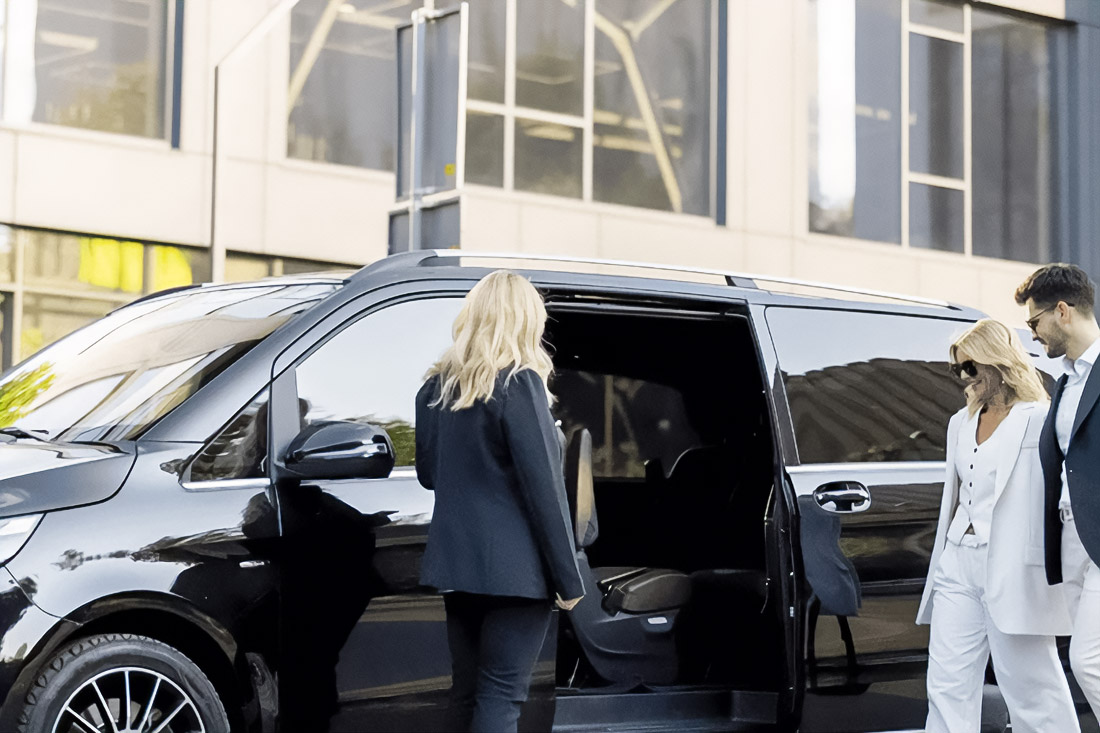
The main focus is on public transport, chauffeur service in Dubai, and connecting modes of transportation. The metro operates continuously for 43 hours, covering 53 stations. This is critical for passenger distribution when people arrive in waves and then leave en masse after the event. Additionally, 260 buses, including 20 double-decker and 240 standard buses, are provided to connect hubs, parking lots and key areas.
Parking is also included in the plan. There are about 900 additional seats available, distributed between the two sites, and the shuttles start operating at about 3 p.m. In parallel, smart screens are being used that warn of road closures and offer alternative routes. As a result, transport planning becomes not a set of constraints, but a management system where every link is important.
Emergency Services, Sanitary Safety And Maritime Navigation
Security is based on large-scale coordination of services. 8,530 officers and 1,145 patrol units are involved in policing, and 33 marine rescue vehicles are additionally involved on the water. This creates a dense cover and speeds up the response if risks arise somewhere, children are lost or help is needed on the spot.
Sanitary safety is also calculated. 2,776 employees are employed, including 242 shift supervisors and 2,534 employees, as well as 246 pieces of equipment. Inspections of food facilities and cleanliness control of public spaces are carried out, because health and order are closely linked. Fire safety is supported by 1,097 firefighters and 123 pieces of equipment, and 257 facilities are pre-checked to reduce the likelihood of emergency scenarios.
A separate layer is navigation safety in coastal areas. A mandatory regime for regulating maritime traffic is being introduced from 22:00 on December 31, 2025 to 02:00 on January 1, 2026. A one-way scheme is used, the schedule of departure and return according to the size of the vessels, and control is carried out through identification systems, cameras and patrols. At the same time, the rate of 0% of incidents in previous periods is noted, and the task is to maintain this level.
The result is a model where mass events are not “sustained”, but managed. Sector zoning, transportation, control, sanitary and medical readiness, navigation and monitoring are all connected. And it is the connection of the elements that turns high risk into an understandable, manageable process.
Soccer lover, foodie, band member, hand letterer and HTML5 Guru. Operating at the crossroads of beauty and programing to craft an inspiring, compelling and authentic brand narrative. My opinions belong to nobody but myself.